
Short answer: yes, a leaky garage door can raise your energy bill
If the garage is attached to the house, it's not a separate building — it's a room with a giant door that rarely seals as well as your front door. When that door lets in heat, humidity, and outside air, your air conditioner works harder to keep the rest of the house comfortable. You're not imagining it, and you're not wrong to notice the thermostat running more than it used to.
Why an attached garage affects the whole house
Most attached garages share at least one wall with living space, and in a lot of homes the HVAC ductwork, the water heater, or even the laundry room sits right there too. When the garage gets hot, that heat moves through the shared wall and into whatever ducts are routed through or near it. The AC senses the warmer air, runs longer, and the bill climbs — even though nobody touched the thermostat.
In this part of Florida, the garage doesn't just get warm, it gets humid. Afternoon downpours and the general moisture load mean a garage with a bad seal is pulling in damp air along with the heat. That extra humidity makes the AC work even harder, because it's not just cooling air, it's also trying to pull moisture out of it.
What's actually letting the air in
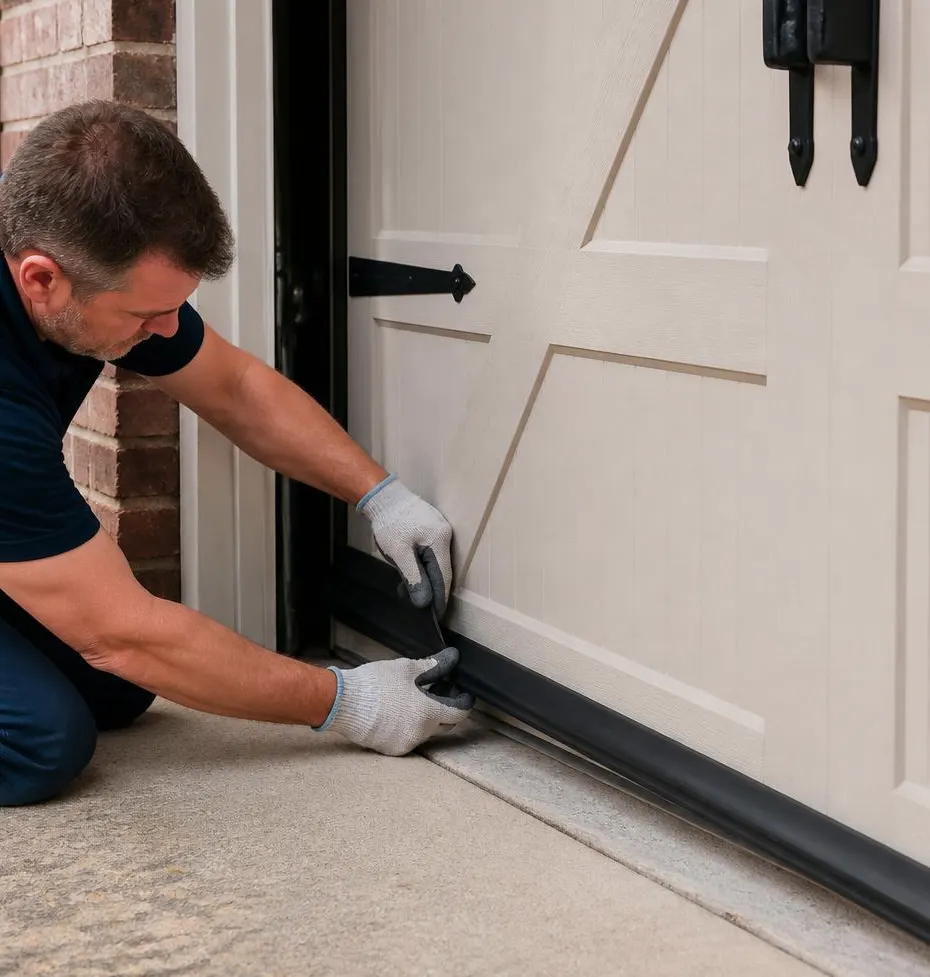
- Worn bottom seal: The rubber strip along the bottom of the door hardens and cracks over time, especially with heat cycling. Once it's flat or split, it stops sealing against the slab.
- Stretched or missing weatherstripping: The strips along the sides and top of the door frame do the same job as weatherstripping on a regular door. When they pull away or compress permanently, daylight — and air — gets through.
- Swollen or warped panels: Humidity swings common to this area can cause wood or composite panels to swell, which throws off how evenly the door sits in the frame. Even steel doors can warp slightly if a panel gets dented or stressed.
- A door that's slightly off track: After a storm, a hard gust, or just years of wear, rollers can walk out of alignment. The door still closes, but not flush, so it seals unevenly along one side.
- Gaps around hardware and sensors: Openers, sensor brackets, and vents cut into the door panel can all be small leak points if they weren't sealed properly during installation.
How to check it yourself before the argument goes further
- Flashlight test, done at night. Have someone stand inside the closed garage while you shine a flashlight along the edges of the door from outside. Light leaking through means air is leaking through too.
- Dollar bill test. Close the door on a dollar bill at a few points along the bottom seal. If it pulls out easily, the seal isn't gripping.
- Feel for drafts on a windy day. Run your hand along the inside edges of the door frame. Air movement you can feel is air movement your AC is fighting.
- Check the shared wall. If the wall between the garage and an adjacent room feels noticeably warmer than other interior walls, that's heat transfer, not your imagination.
What fixes it — and what doesn't
Weatherstripping and bottom seals are the cheapest fix and often solve most of the problem. Replacement kits run in the range of a typical DIY home repair project, and a qualified technician can usually swap worn seals in one visit as part of a general tune-up.
If the door itself is swollen, warped, or has a damaged panel, new seals won't fix that — the door needs to sit flush in the frame again. That's a panel replacement job, not a weatherstripping job, and trying to compensate with extra seal material usually just wears out faster in our humidity.
If the door is off track, no amount of sealant helps until it's realigned, because the door isn't meeting the frame evenly in the first place. That's a mechanical repair, not a sealing one.
When to call Greensboro Door & Opener
If the dollar bill slides out, the garage feels noticeably hotter than it should, or one side of the door looks uneven when it's closed, it's worth having someone look at the whole system rather than guessing. Our Garage Door Maintenance & Tune-Up covers seals, rollers, and alignment in one visit, so you're not just treating the symptom. If a panel has swollen or warped from moisture, Garage Door Panel Replacement gets the door sitting flush again instead of fighting a shape it can't hold.
Either way, you'll know within a few minutes of the technician looking at it whether this was a $20 seal problem or something bigger — and you'll have a straight answer for whoever you're arguing with.
If you're in Greensboro, Quincy, Chattahoochee, Midway, Havana, Gretna, Bristol, or Tallahassee and your garage is running hotter than it should, call Greensboro Door & Opener and we'll come take a look.