
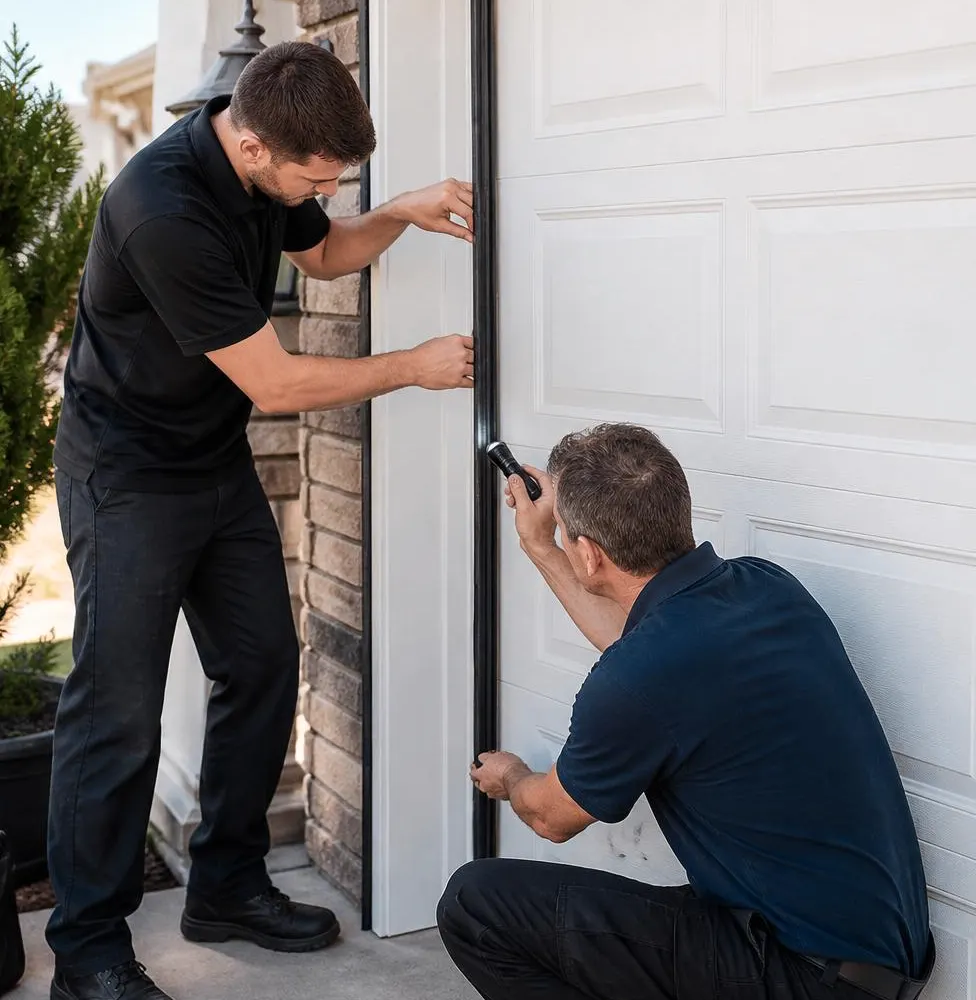
The Moment You Spot It
You're grabbing the cooler out of the garage before a weekend trip and you notice it: a rusty streak bleeding down from a screw head, or a bottom panel that looks a little puffy, like the paint is lifting off a swollen spot underneath. Maybe the door doesn't sit flush against the frame anymore and there's a gap at the corner that wasn't there last year. One of you says "it's just surface rust, it's fine." The other says "that door is rotting from the inside out." You're both a little bit right, and here's how to actually settle it.
Why This Happens So Much Here
Garage doors in this part of Florida take a beating that doors in drier climates never deal with. Between the humidity, the afternoon downpours, and the occasional salt-laden air moving in from the coast, moisture gets into places it shouldn't and stays there longer than it should. A few specific things are working against your door:
- Condensation inside the garage. When it's hot and humid outside and the garage stays cooler, moisture condenses on the inside of a steel door the same way it fogs up a cold glass. That trapped moisture sits against the metal panel for hours.
- Standing water at the bottom. Heavy afternoon storms push water toward the base of the door, especially if the driveway slopes toward the garage or the weatherstripping has worn down. The bottom panel takes the brunt of it every single time it rains.
- Humidity working on wood components. If your door has a wood overlay, wood trim, or wood jambs, humidity gets absorbed into the fibers and the wood expands. That's swelling. When it dries back out, it contracts again, and that cycle eventually warps or cracks the material.
- Salt air acceleration. If you're closer to the coast or just get exposure on windy days, salt in the air speeds up corrosion on steel hardware, hinges, and track components significantly faster than inland moisture alone.
None of this is a defect in your door. It's just what humid, storm-heavy Florida weather does to any garage door over time, especially one that doesn't get much attention.
Cosmetic Rust vs. Something Bigger
This is where the argument usually lives, so here's the actual test.
Likely just cosmetic (annoying, but not urgent)
- Small surface rust spots on the painted skin, especially around screw heads or minor paint chips
- Light discoloration that hasn't broken through the metal
- Rust that wipes or scrapes off without leaving a pit or hole
This kind of rust is a maintenance item. Sand it lightly, treat it with a rust-inhibiting primer, and repaint. It won't fix itself, but it's not threatening the door's function yet.
Worth taking seriously
- Swelling or bubbling that has a soft spot underneath. Press on it. If the panel gives or feels spongy, moisture has gotten into the core material (common with insulated steel doors that have a foam or wood-composite center) and it's degrading from the inside.
- Rust that's eaten through to a hole or flaking metal. Once rust perforates the steel skin, it only spreads. Painting over it just hides it temporarily.
- Rust on moving hardware — hinges, rollers, the torsion spring, the track. Rust here isn't cosmetic at all. It adds friction, strains the opener motor, and can cause a spring or cable to fail without warning.
- A door that no longer closes flush or seals properly. Swollen wood trim or a warped panel can throw off the alignment enough that the door lets in water and bugs, which only accelerates the damage.
If you're standing in the garage arguing about it, the spongy-panel test and a close look at the hardware will settle most disputes on the spot.
What You Can Reasonably Do Yourself
For light surface rust and minor cosmetic issues, a weekend project can handle it:
- Scrape or sand the rusted area down to clean metal.
- Wipe it down and let it dry completely — don't trap moisture under new paint.
- Apply a rust-inhibiting metal primer.
- Finish with exterior-grade paint rated for the material.
- Lubricate hinges, rollers, and the track with a garage-door-specific lubricant (not WD-40, which doesn't hold up well in humidity) to slow future hardware corrosion.
This buys time and keeps small problems small. It does not fix a swollen core panel, rusted-through steel, or corroded springs and cables — those are mechanical and structural issues, not paint issues.
When to Call Greensboro Door & Opener
If the panel feels soft when you press on it, if rust has gone past the surface, or if hardware like the springs, cables, or rollers shows heavy corrosion, it's time to get it looked at rather than keep repainting over it. We handle Garage Door Panel Replacement when a section has swollen or rusted past the point of a cosmetic fix, so you're not replacing the entire door over one damaged panel. We also run a Garage Door Maintenance & Tune-Up service that catches early rust and wear on hinges, rollers, and hardware before it turns into a spring failure or an off-track door — which matters a lot more here than in drier parts of the state, given how much moisture this climate throws at a garage door every single season.
If you and your spouse are still debating what you're looking at, send us a photo or give us a call. We'll tell you straight whether it's a $40 paint job or a panel that needs replacing — no upselling, no guessing. Greensboro Door & Opener serves Greensboro, Quincy, Chattahoochee, Midway, Havana, Gretna, Bristol, and Tallahassee. Reach out today and we'll get it sorted before the next round of storms rolls through.